Content
Packing for a trip is a long series of small arithmetic: every item has to justify its space and its weight. A foldable backpacking stove earns that space more easily than most gear, because the fold is not a gimmick. It is what lets a full-size burner head sit inside a mug, a corner of a shoe box or a side pocket, and still be ready to cook a proper meal at the end of the day.
We have been building outdoor gas appliances in Yongkang since 2012, and most of what we know about this category came back to us as feedback from dealers, distributors and the people who actually carry the stoves up a hill. The notes below are the things we would want to know ourselves before choosing one: which folding mechanisms are worth paying for, which specifications are worth trusting, and where the compromises usually hide.
The label covers at least three different mechanical ideas, and they behave quite differently once you are standing in the dark trying to light a burner with cold hands. Knowing which one you are looking at saves a lot of disappointment later.
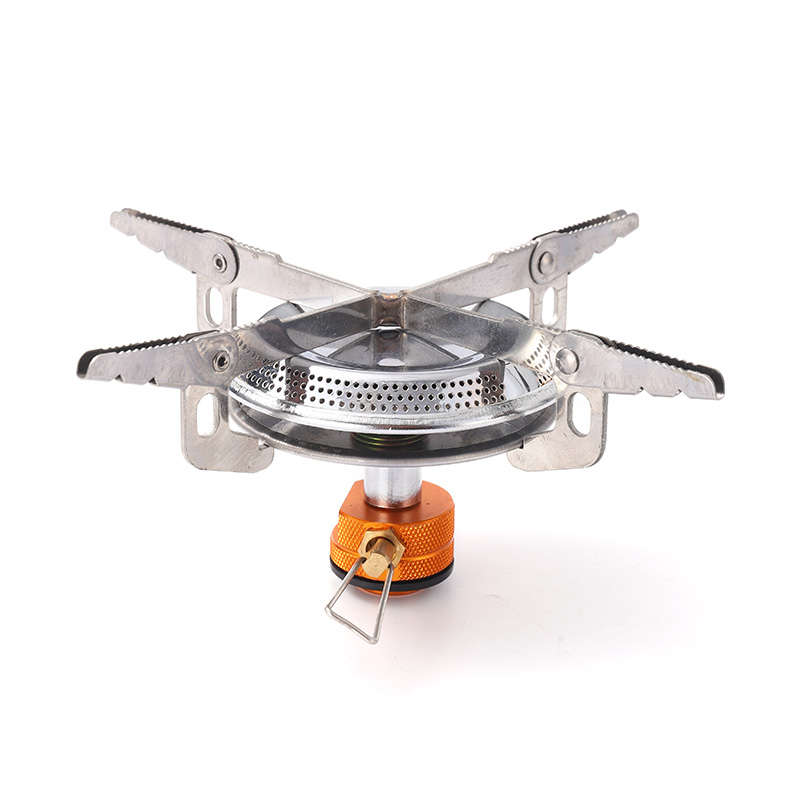
Most stoves in this class fold their legs flat against the burner body. Good hinges are spring-loaded or detented, so the legs lock out and stay put once a pot is loaded, then fold back without pinching fingers. The diameter of the extended base is the number worth checking: a wide stance handles a one-litre pot comfortably, while a narrow one is fine for a mug and shaky for anything larger. Hinges are also the first place grit collects, so they should be easy to wipe.
Some designs collapse the burner itself into a disc or a short cylinder, or fold the neck on a hose-fed model so the whole assembly lies flat in the pack. These pack smaller, but they add joints, and every joint is a place where dust, water or a stray thread can cause a leak or a blocked port. If a design has them, they should be simple to inspect and simple to clean.
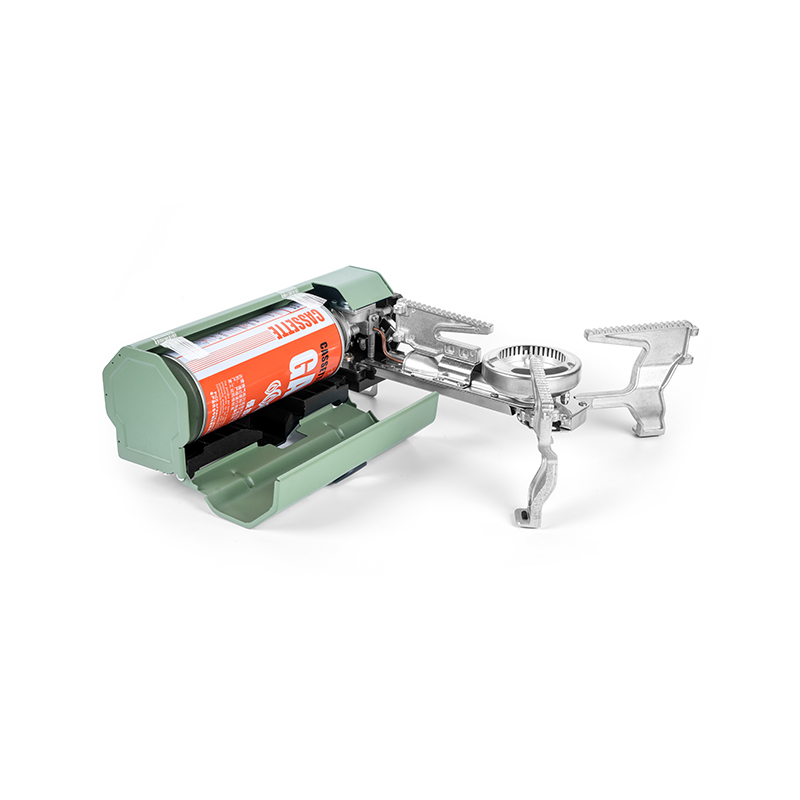
One example from our own range is a folding stove with an extension catheter: the burner folds down for storage and the hose packs along the side of the body, so the assembly sits flat rather than as a lump at the bottom of the pack. The catheter also keeps the canister away from the flame, which matters when you are cooking low and slow.
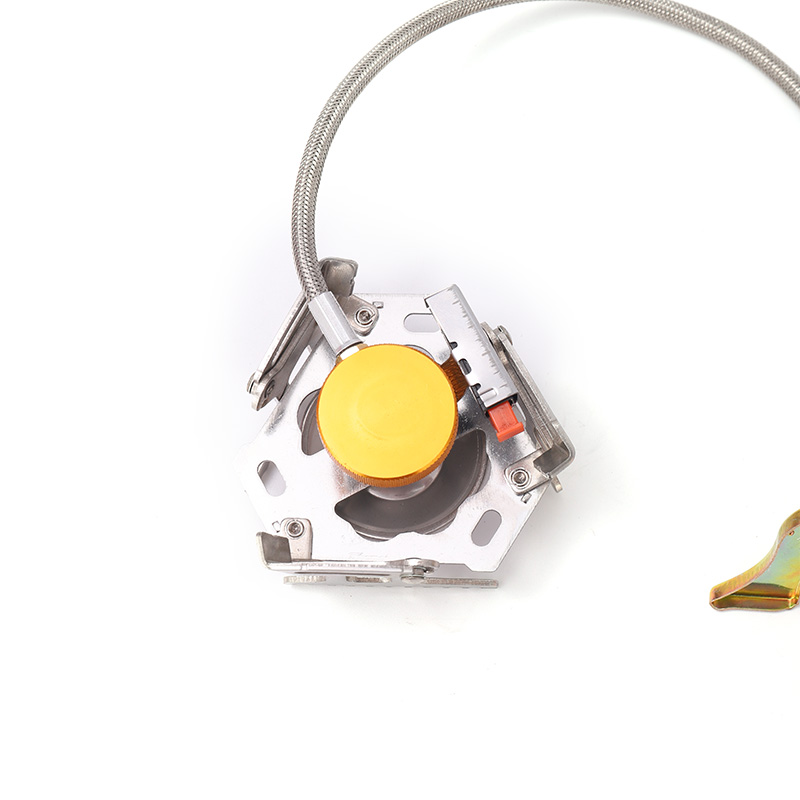 Folding Backpacking Stove with Extension CatheterFolding burner and extension catheter keep the canister clear of the flame while packing flat for backpacking; 2800 W output suits low, slow camp cooking.View Product →
Specification sheets are written to win a comparison, not to describe a hike. A boil time is usually quoted for half a litre of water in a covered pot, at room temperature, out of the wind, which is not always the weather you get. The useful question is not which stove is quickest in a test, but whether it stays quick when the wind picks up and the canister is half empty.
| Format | Typical packed weight | What it does well | Where it asks you to compromise |
|---|---|---|---|
| Canister-top ultralight | 60 to 110 g | Fast solo boils, tiny footprint | Tippy under wide pots, little wind protection |
| Folding single burner with legs | 150 to 350 g | Stable base, folds flat, suits a range of pots | More setup steps, hinges need cleaning |
| Folding single burner with hose | 200 to 400 g | Canister kept away from flame, easier to shield | Hose and connector need regular checking |
| Integrated burner and pot | 350 to 600 g | Strong fuel efficiency in wind | Locked to one pot size |
| Folding multi-burner, three to five heads | 1 to 3 kg | Group cooking with real pans | Weight and bulk, needs level ground |
If you remember only one column, remember packed weight and footprint together. A stove that is light but awkward to stow will still cost you space, and a stove that packs flat but weighs twice as much will cost you on the climbs.
Wind steals heat from the pot and pushes the flame sideways. It is the most common reason people describe a perfectly good stove as weak, and it is the reason windproof heads, recessed burner ports and folding screens exist. A head that shields its own flame will hold a boil in a way that a bare cap burner simply cannot, even when the bare burner has more headline output.
Cold brings a second problem. As the canister cools, pressure drops, the flame shrinks and the burner sounds hollow. Keeping the canister in an inside pocket before use helps a great deal; never warm it with a flame, a hot pan or boiling water. A blend with more isobutane copes better with low temperatures, but no canister likes being cold soaked on frozen ground.
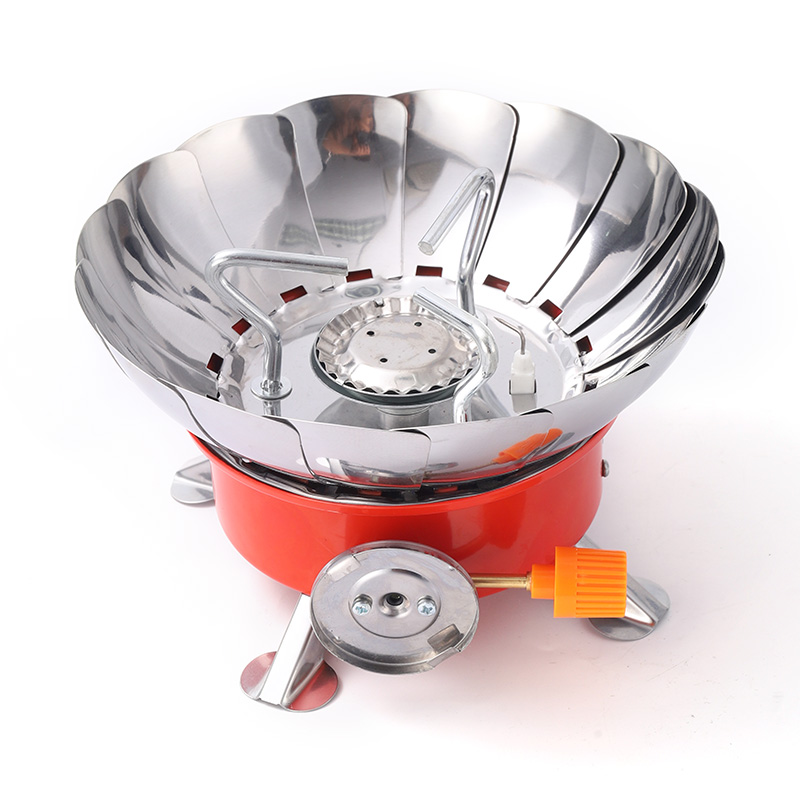
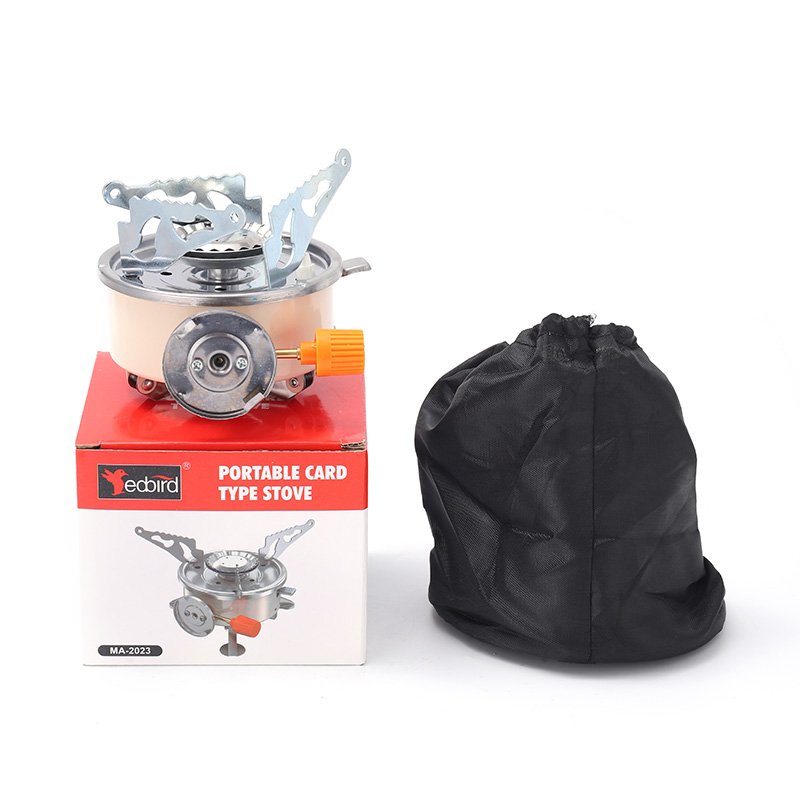 Windproof Backpacking Ultralight Tent Gas StoveWindproof folding stove with 2800 W output and compact 288 g build; stable pot support suits backpacking when wind or cold canister pressure affects flame.View Product →
Our windproof ultralight model follows the same logic: a low burner, a tight pot support and a body that folds into a small bundle. It is designed for the campsite clearing rather than the inside of a tent, and we would say the same about every stove we sell, however well the flame is shielded.
A stove that goes from rocket to nothing is a stove that cannot cook rice, melt butter or keep a sauce warm. The difference usually sits in the valve: a well-made needle valve with a regulator gives a long, usable low end, while a coarse valve gives you one hot setting and a prayer. It is worth testing before a trip rather than after.
Not every canister in the world uses the same connection. Threaded canisters following the standard self-closing valve pattern are the common case, bayonet-style cans appear in some regions, and long butane cans still fill shelves in many markets. A stove that only accepts one format is a stove that limits where you can resupply, which is why a simple adapter in the pack often solves a problem that no amount of burner design can.
Adapters are cheap insurance but they do add a joint, so treat them as part of the stove rather than as an accessory. Keep one adapter matched to one stove, check the seal before each trip, and store it where it will not be crushed by a pot.
Solo trips forgive a lot. Group trips do not. Once you are cooking for four or more, one folding single burner becomes a queue, and the pots get bigger while the patience gets shorter. This is where the multi-head folding stoves earn their weight: three, four or five heads sharing one frame, with a wider base that takes a proper pan rather than a mug.
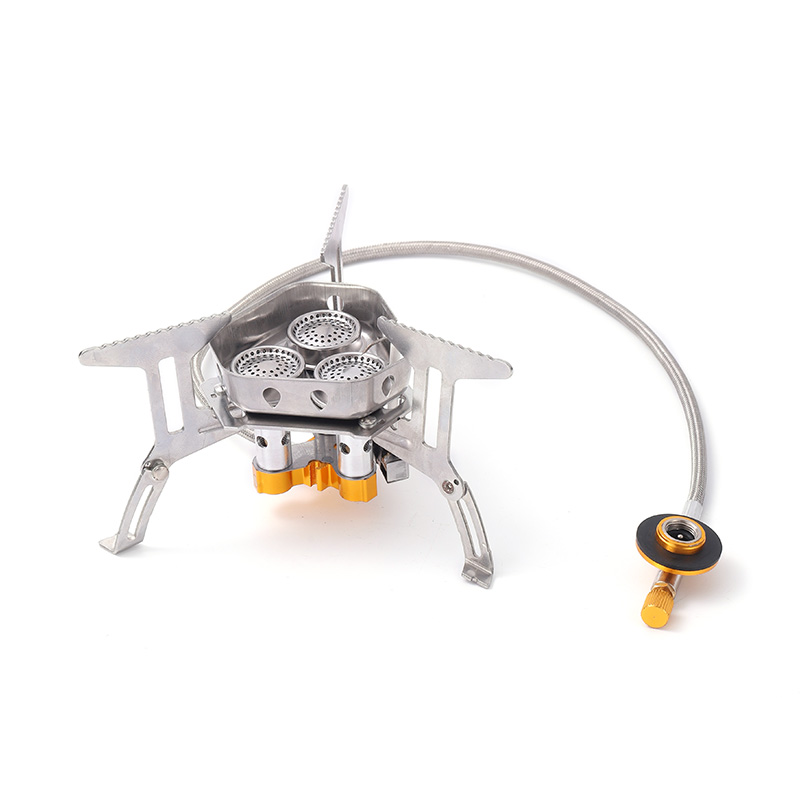
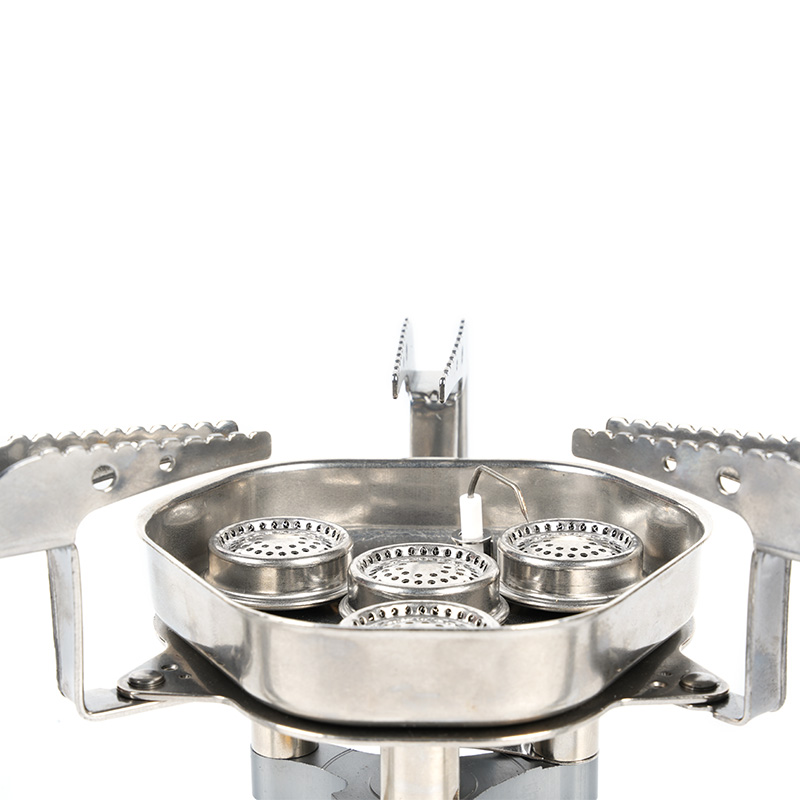 Four-Head Folding Backpacking Stove for Group Camp CookingFour-head folding stove gives a wider cooking area and stable base for shared camp meals, packing down for backpacking and road travel.View Product →
Our four-head backpacking model is built around that idea, and further up the range we make a five-head travel stove rated at 10500W for larger camps. Head count is only half the story, though. Windshields, pot placement and fuel draw matter just as much, and a five-head stove on soft ground will still wobble if the base is not set level.
Most stoves do not fail because of the burner. They fail because of a blocked port, a dried-out seal or a hinge that stopped locking after a season of grit and damp. A short routine after every trip prevents nearly all of it.
We keep a longer checklist in our guide to backpacking stove safety and maintenance, including the leak checks worth doing before a first trip of the year.
For a private buyer, the checklist is short: what canister will you find locally, how wide a pot will you use, and will you cook in wind. For a buyer placing an order, the questions shift towards consistency across a production run, documentation and how the stove behaves in the hands of a customer rather than a tester.
We work as both manufacturer and exporter, with design, mould making and component production under one roof, so most of these answers are settled long before a carton is sealed. Our team can develop a stove from a drawing or a sample, and every stage carries its own inspection. If you would like to see how that is organised, take a look at our factory and the process behind each model.
A folding backpacking stove is a small piece of engineering that has to survive a lot of ordinary abuse: cold mornings, half-empty canisters, uneven ground and a pack that gets thrown into a truck. Choose one whose fold still locks, whose valve still simmers and whose parts you can inspect, and it will keep earning its place in the pack for many seasons.

Copyright © Yongkang Aomijia Industry & Trade Co., Ltd. All Rights Reserved.
Lightweight Camping Gas Stove Cookware Factory

 English
 中文简体
 Español
 Português